
Special Mayor's Message
November 2, 2026 – Over the past few days, I’ve had enough people ask me about the recent City Council decisions about Acme Lowcountry Kitchen that I felt the need to make sure residents are fully informed. Social media can be a useful format, but in this case the discussions on social media do not reflect all of the context and/or the facts. Like many of you, I view Acme as an important part of the fabric of our community and a great restaurant. They’ve done so much for our community, and particularly our first responders.
Required Zoning Knowledge and Context |
|---|
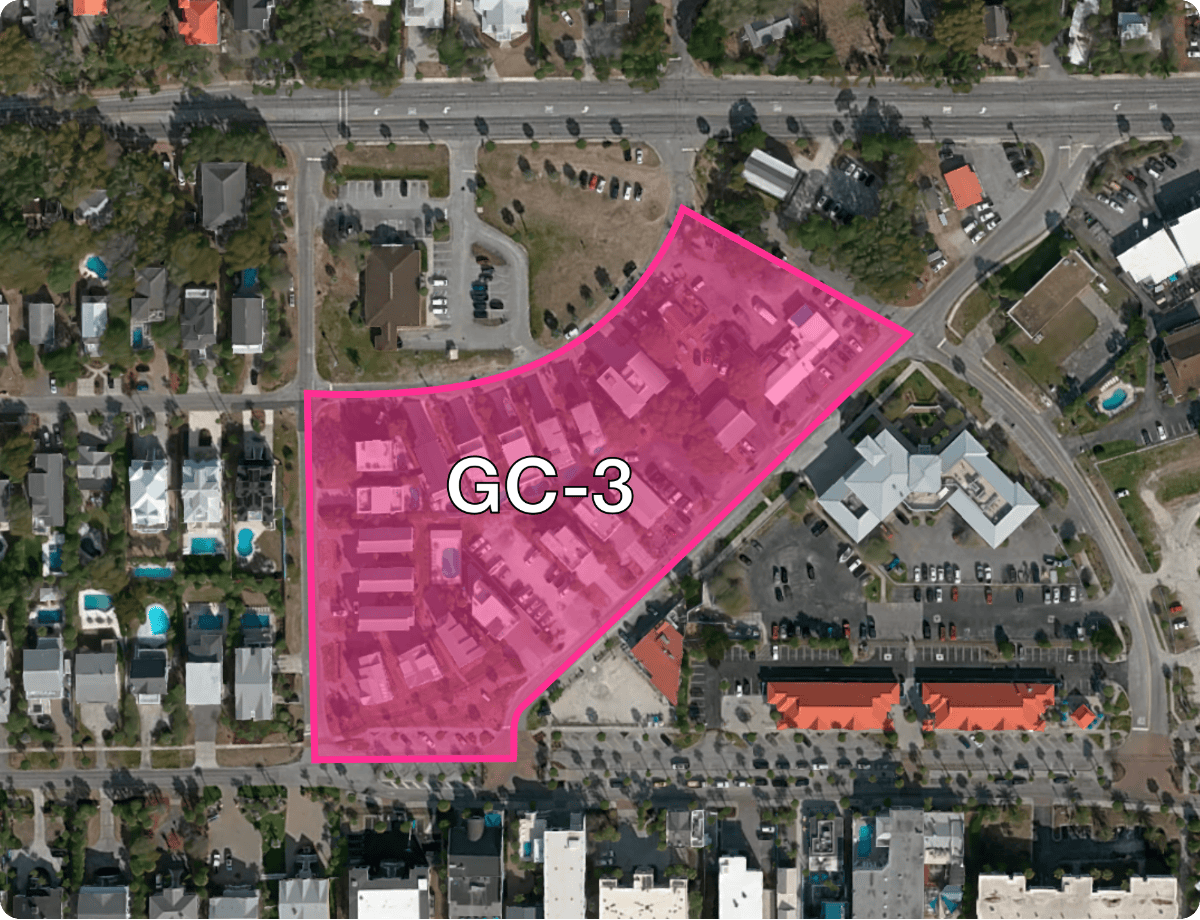
Can the City reward Acme for its community contributions? Council must therefore evaluate each request with an eye toward both its immediate benefits and how the City would address comparable requests in the future. The Planning Commission plays an important role in this review by considering the long-term implications, consistency with the Comprehensive Plan, and compatibility with the surrounding area. Additionally, special treatment would be what’s known legally as “spot zoning.” The SC Supreme Court defines spot zoning as giving a small land parcel a classification entirely unlike the zoning for surrounding areas in a way that benefits the owners of that property and harms other property owners. What are Setbacks? Setbacks serve a public purpose such as maintaining clear views of oncoming traffic, separating incompatible types of buildings, preserving space for light, air, and landscaping between buildings, or simply preserving a neighborhood’s low density character. What is GC-3? GC-3 covers the City block near Front Beach highlighted in Pink, including Acme. |
One of the owners of Acme, Bobby Simons, came to City Council in July asking for a change to the city’s zoning code for the commercial district they are in, GC-3, in order to allow him room to build a new, larger restaurant on his property while keeping the existing building in operation during construction. His request was primarily for a reduction in the parking requirement for this commercial district which would allow a larger building to be built.
City Council expressed a willingness to work with Acme and make accommodations and referred this request to the Planning Commission which is comprised of IOP residents that include architects and planning professionals. They considered how a change to the GC-3 district could accommodate a new, larger Acme. They met on August 12th and September 9th to discuss this request and recommended:
- Reducing the required setbacks from 25 to 0 feet along three street fronts including J. C. Long Blvd, Pavilion Dr and Carolina Blvd.
- Reducing parking requirements by 25%, recognizing that many Acme customers arrive on foot, while still preventing a situation where Acme’s parking demands spill over onto surrounding businesses, parking lots and city streets in the already parking-constrained Front Beach area.
Those recommendations were incorporated into Ordinance 2026-10 and provided to City Council for their first reading.
On September 22nd, City Council approved the first reading with the knowledge that they would have an opportunity at its second reading to adjust the ordinance. They asked the Planning Commission to further evaluate whether zero-foot setbacks could lead to some unintended consequences such as an inconsistent pattern of development relative to existing buildings or allow a high intensity level of development incompatible with the neighborhood’s character.
At its October 14th meeting, The Planning Commission reviewed the ordinance and revised its recommendations as follows:
- Reduce setbacks from 25 to 0 feet along J. C. Long Blvd, consistent with the existing commercial development along the boulevard.
- Reduce setbacks from 25 to 15 feet along Carolina Blvd.
- Reduce setbacks from 25 to 10 feet along Pavilion Dr.
- Retain the proposed 25% reduction in required parking.
- Prohibit new residential development in GC-3, reserving future development of the district for commercial uses only.
City Council voted to approve recommendations 1 through 4 at its October 27th meeting. Also, the city communicated its willingness to accommodate:
- Access to the city’s garbage compactor during construction and long term.
- Access to the city’s municipal parking lot for parking during construction.
- Continued discussions with City Council as Acme moves into designing a building that will fit their business needs.
Next steps are for the Acme owners to engage an architect and design a building that would fit within the setbacks approved by City Council and meet their business needs.
All that background to say, I feel the city has been very accommodating to get to a solution for this valued island business and has agreed to continue the dialogue if any issues come up during the design phase. Zoning or parking requirement changes for any city are major decisions not to be made lightly. I think City Council and our Planning Commission have been deliberate in their decision making – even if the process appears long and drawn out. Decisions like these require extensive deliberation and debate to get to a compromised solution for all involved.